

A Mild Twinge Can Mean More Than You Think
Many people experience a brief, sharp sensation when drinking a cold beverage or eating something sweet. Because the discomfort usually disappears within seconds, it can be easy to dismiss it as a minor inconvenience. However, mild tooth sensitivity is often one of the earliest warning signs that something beneath the surface needs attention.
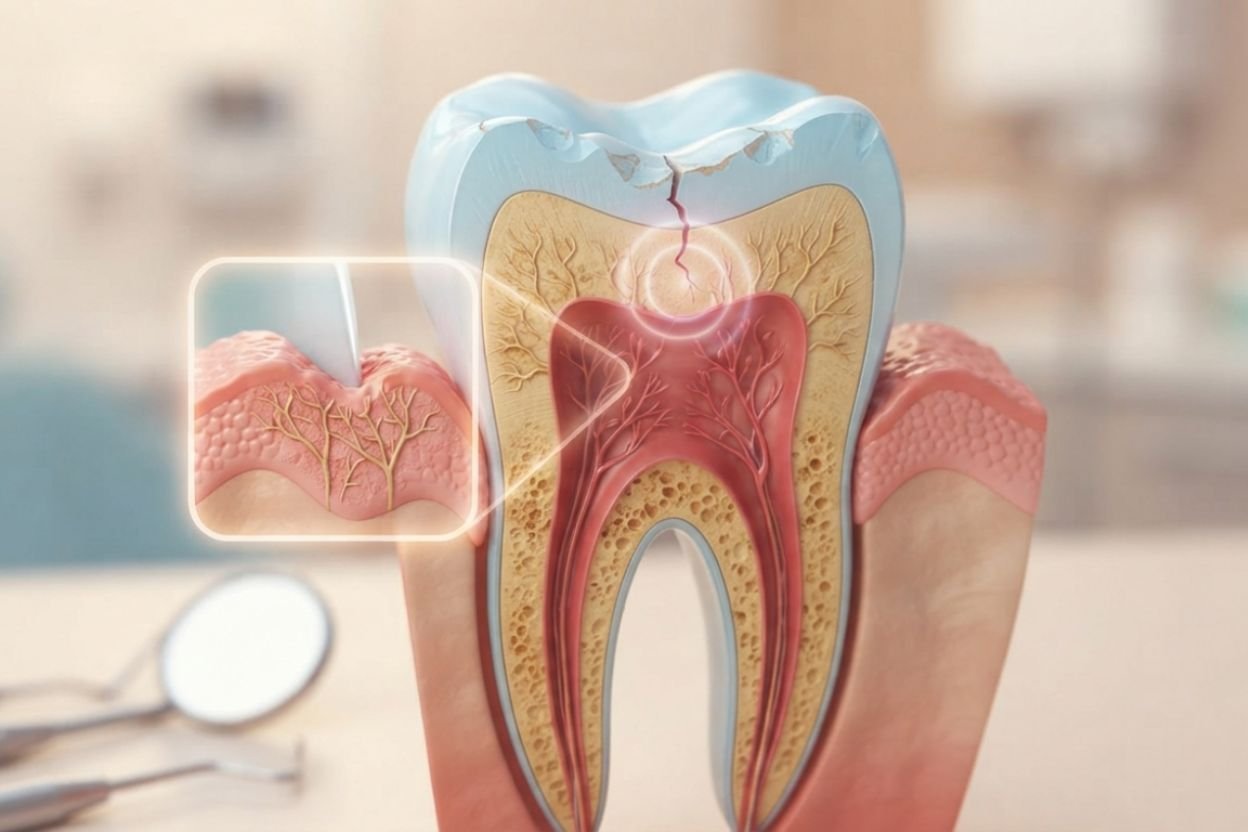
Tooth sensitivity occurs when the protective layers of the tooth become compromised, allowing external stimuli to reach the more sensitive structures underneath. While the discomfort may seem insignificant at first, it can sometimes indicate an underlying dental problem that will not resolve on its own. Early assessment can make treatment simpler and help prevent more serious complications.
Common Causes of Tooth Sensitivity
Several dental conditions can lead to tooth sensitivity, and identifying the exact cause is important before appropriate treatment can begin.
One of the most common causes is enamel wear. Enamel is the hard outer layer that protects the tooth from temperature changes, acids and bacteria. Over time, acidic foods and drinks, aggressive brushing or teeth grinding can gradually wear away this protective layer, exposing the more sensitive dentine beneath.
Tooth decay is another frequent cause. Even a small cavity can expose sensitive areas of the tooth, making hot, cold or sweet foods uncomfortable. As decay progresses, the discomfort may become more frequent and intense.
Cracked teeth can also cause sensitivity. Small cracks are not always visible, but they may allow temperature changes and bacteria to irritate the inner parts of the tooth, resulting in intermittent pain that can worsen when chewing.
Gum recession is another common factor. As gums recede, they expose the tooth roots, which are not protected by enamel. These exposed surfaces are more sensitive to hot, cold, sweet and acidic foods. Gum recession may develop gradually because of gum disease, ageing or brushing too aggressively.
Older or worn fillings may also contribute to sensitivity. Fillings can deteriorate over time, allowing small gaps to develop where bacteria and food particles can enter and irritate the underlying tooth structure.
Why It Should Not Be Ignored
Although sensitivity often begins as a mild annoyance, ignoring it can allow the underlying condition to worsen. A small cavity may become deeper, eventually reaching the tooth’s pulp. What starts as occasional discomfort can develop into persistent pain that requires more complex treatment.
If bacteria reach the pulp inside the tooth, infection may develop. At this stage, treatment may involve more extensive restorative procedures rather than a simple filling. Likewise, untreated cracks can extend further, increasing the risk of structural damage and possible tooth loss in severe cases.
Sensitivity linked to gum recession or gum disease may also worsen over time. Continued gum loss can expose more of the tooth root, making the affected teeth increasingly vulnerable to decay and further damage. Early intervention may help slow this progression and protect long-term oral health.
How a Redfern Dentist Can Help
Because tooth sensitivity has many possible causes, professional diagnosis is important. A Redfern Dentist can examine the affected teeth, review your symptoms and determine whether the discomfort is caused by enamel wear, decay, gum recession, a cracked tooth, worn restorations or another underlying issue.
The examination may include a visual assessment, dental imaging where appropriate and tests that help identify the source of the sensitivity. Rather than simply treating the symptom, the goal is to identify the underlying condition so the most suitable treatment can be recommended.
An accurate diagnosis helps ensure that small problems are managed before they develop into more significant dental concerns requiring more extensive procedures.
Professional Solutions for Tooth Sensitivity
The most suitable treatment depends on the underlying cause of the sensitivity.
When enamel wear is responsible, fluoride applications or desensitising treatments may help strengthen the tooth surface and reduce discomfort. Specialised products can also help block the pathways that transmit sensitivity to the nerve.
If decay is identified, restoring the affected tooth with a filling can remove the damaged area and help prevent further deterioration. Worn or leaking fillings may also require replacement to restore proper protection.
Where gum recession contributes to exposed roots, improving gum health through professional care and appropriate oral hygiene may reduce sensitivity and help slow further recession. In more advanced cases, additional treatment may be considered depending on the extent of the problem.
For cracked teeth, treatment varies according to the severity and location of the crack. Early intervention may improve the chance of preserving the tooth before the damage becomes more extensive.
Regular preventive dental care also plays an important role. Routine examinations allow early changes to be identified before symptoms become severe, helping reduce the likelihood of more complex treatment later.
Early Attention Can Protect Your Smile
A brief twinge when eating or drinking may seem harmless, but it can be your body’s way of signalling that a dental problem is developing. Whether the cause is enamel wear, decay, gum recession, a cracked tooth or an ageing restoration, early assessment offers the best opportunity to prevent further damage.
If you notice ongoing or recurring sensitivity, arranging an appointment with a Redfern Dentist can help identify the underlying cause and provide appropriate treatment before the problem progresses into a more serious dental condition.
FAQs
Is tooth sensitivity always caused by cavities?
No. Sensitivity can also result from enamel wear, gum recession, cracked teeth, worn fillings, teeth grinding or exposed tooth roots.
Can sensitive teeth heal on their own?
Some mild sensitivity may improve if the cause is temporary, but persistent or worsening sensitivity should be assessed to identify any underlying dental problem.
When should I see a dentist about tooth sensitivity?
If sensitivity occurs frequently, lasts for more than a few days, becomes more severe or affects only one tooth, it is advisable to have it professionally examined.
Can worn fillings cause tooth sensitivity?
Yes. Old or damaged fillings can create small gaps that expose sensitive tooth structures or allow bacteria to enter, leading to discomfort.
Does gum recession make teeth more sensitive?
Yes. As gums recede, the tooth roots become exposed. Because roots are not covered by enamel, they are more sensitive to temperature changes and certain foods.
What treatments are available for tooth sensitivity?
Depending on the diagnosis, treatment may include fluoride applications, desensitising products, fillings, gum care, replacement of worn restorations or other restorative procedures that address the underlying cause.
