

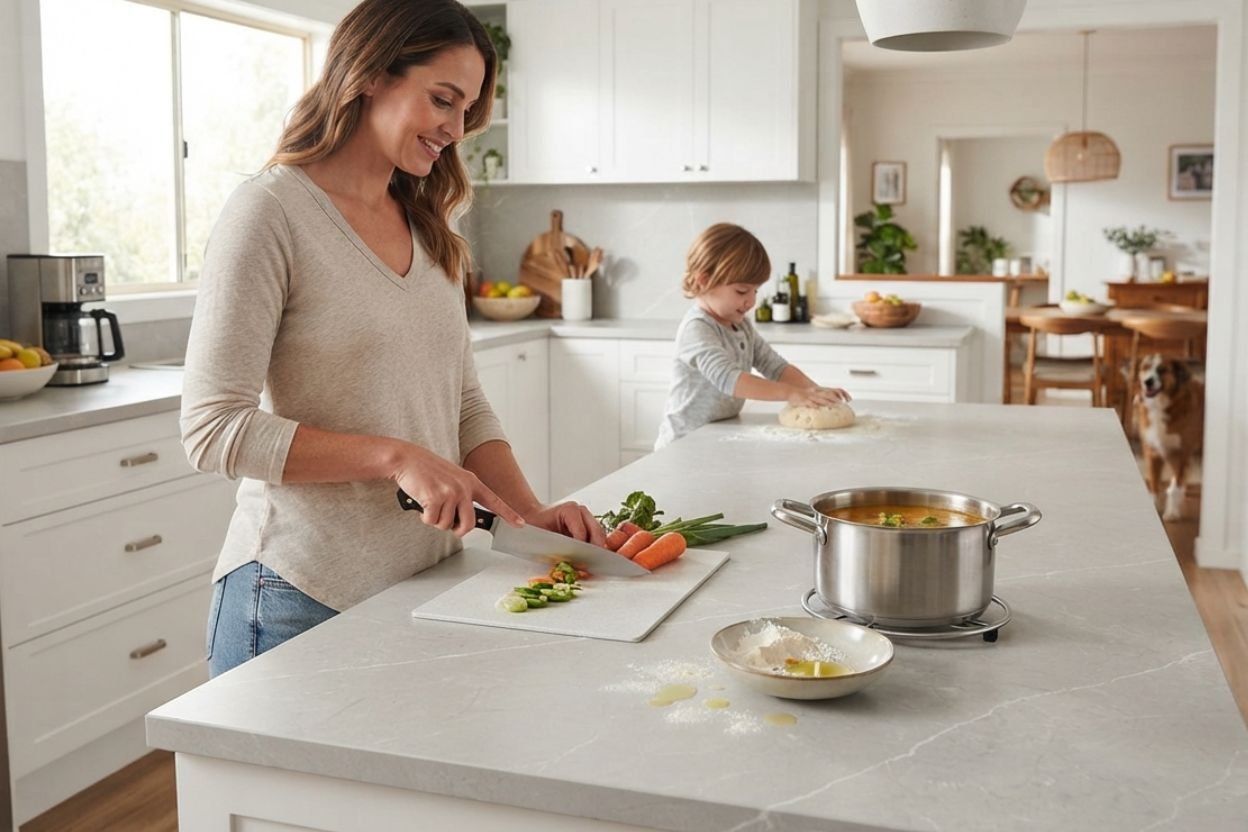
Why Durability Matters in a Busy Family Kitchen
A family kitchen is one of the busiest spaces in any home. From preparing breakfast before school to cooking dinner, helping with homework and hosting weekend gatherings, the kitchen experiences constant activity throughout the day. Benchtops are expected to handle hot cookware, accidental spills, sharp utensils and the occasional impact from heavy pots or kitchen appliances. Choosing a surface that can withstand this level of daily use is essential if you want your kitchen to remain functional and attractive for years.
As homeowners increasingly prioritise durability alongside style, many are exploring sintered stone Sydney options as a practical solution for modern kitchens. The material has gained attention for its ability to withstand everyday wear while requiring relatively little maintenance, making it well suited to high-traffic family environments.
Why Sintered Stone Performs Well
Sintered stone is manufactured by subjecting natural minerals to extremely high heat and pressure, creating a dense, compact surface with very low porosity. This manufacturing process results in a benchtop that performs well under demanding kitchen conditions.
One of its biggest advantages is scratch resistance. Everyday kitchen activities, including food preparation, moving utensils and placing cookware on the benchtop, are less likely to leave noticeable marks than on some other surface materials. While cutting boards are still recommended, the material generally withstands regular family use well.
Heat resistance is another major benefit. Busy households frequently handle hot pots and baking trays, and sintered stone is designed to tolerate high temperatures without the resin-related damage associated with some engineered surfaces. Although trivets remain good practice, the material offers added peace of mind during everyday cooking.
Stain resistance also makes it an attractive choice. Because the surface is non-porous, common kitchen spills such as coffee, tea, wine, cooking oils and sauces are less likely to penetrate the material. Unlike many natural stones, it generally does not require periodic sealing to maintain this level of protection.
Impact resistance is another important consideration for families. While no benchtop material is completely indestructible, sintered stone is designed to cope well with everyday use. Care should still be taken around exposed edges, as direct impacts from heavy objects may cause chips.
Everyday Practicality
Beyond technical performance, practicality is often what matters most in a busy household. Family kitchens experience frequent cooking, constant cleaning, food preparation, children’s activities and regular entertaining. Benchtops need to cope with these demands without requiring excessive maintenance.
Sintered stone performs well because its non-porous surface makes routine cleaning relatively simple. Most everyday messes can be removed using mild detergent and water, helping homeowners maintain a clean appearance without specialised products or regular resealing.
The material also maintains its appearance under consistent daily use. Frequent exposure to moisture, food preparation and household activity is less likely to cause staining or surface deterioration than with more porous alternatives. This makes it particularly appealing for households with children, frequent cooking schedules or multiple family members using the kitchen throughout the day.
Its UV stability provides an additional benefit for kitchens that receive significant natural sunlight or include adjoining alfresco areas. Extended sun exposure is less likely to cause noticeable fading, helping maintain a consistent appearance over time.
Things to Consider Before Choosing Sintered Stone
Although sintered stone offers many advantages, there are practical considerations to evaluate before making a final decision.
Cost is often one of the first factors. Sintered stone may involve higher fabrication and installation costs than some alternative benchtop materials because specialised equipment, skilled fabrication and careful handling are required throughout the process.
Installation should always be completed by experienced professionals. Despite its excellent surface durability, the slabs require careful transport, cutting and fitting to minimise the risk of edge damage during installation. Improper handling can lead to cracking or chipping before the benchtop is even in use.
Choosing the right finish is equally important. Matte finishes often hide fingerprints and minor marks more effectively, while polished finishes can provide a brighter appearance but may require slightly more attention to maintain their look, depending on household use. The ideal finish depends on your family’s cooking habits, design preferences and expected level of daily activity.
Professional Advice for the Best Results
Selecting a quality material is only part of achieving a durable kitchen. The expertise of the supplier and installer also plays a significant role in the long-term performance of the benchtop.
Experienced professionals can recommend suitable slab thicknesses, edge profiles, joint placement and support requirements based on your kitchen design. They also understand the specialised fabrication techniques required for sintered stone, reducing the likelihood of installation-related issues.
Professional guidance also helps homeowners choose colours and finishes that complement both their lifestyle and the overall kitchen design. A well-planned installation can maximise durability while helping ensure the finished surface performs as intended for many years.
A Durable Investment for Modern Family Kitchens
Choosing a kitchen benchtop is a long-term decision that affects both everyday functionality and the appearance of the home. Families often need a surface capable of handling frequent cooking, heavy use, accidental spills and changing household demands without requiring extensive maintenance.
For homeowners seeking a combination of durability, modern aesthetics and low ongoing maintenance, exploring sintered stone solutions in Sydney is worth considering. Working with experienced suppliers and installers can help ensure the material is properly selected, fabricated and installed, allowing you to enjoy a kitchen surface that remains attractive and practical even in a busy family home.
FAQs
Is sintered stone suitable for busy family kitchens?
Yes. Its resistance to scratches, stains, heat and everyday wear makes it well suited to kitchens that experience frequent daily use.
Does sintered stone require sealing?
No. Unlike many natural stones, sintered stone is non-porous and generally does not require periodic sealing.
Can hot pots be placed directly on sintered stone?
Sintered stone has excellent heat resistance, although using trivets remains a sensible practice to protect both the benchtop and surrounding cabinetry.
Is sintered stone difficult to maintain?
No. Daily cleaning typically requires only mild detergent and water, making routine maintenance straightforward.
Can sintered stone chip?
While the surface is highly durable, exposed edges may chip if struck by heavy objects, making professional installation and careful use important.
Is professional installation necessary?
Yes. Sintered stone requires specialised fabrication, cutting and installation techniques to achieve the best performance and minimise the risk of damage.
READ MORE : What Happens When Roof Ventilation Is Overlooked During Reroofing?
