

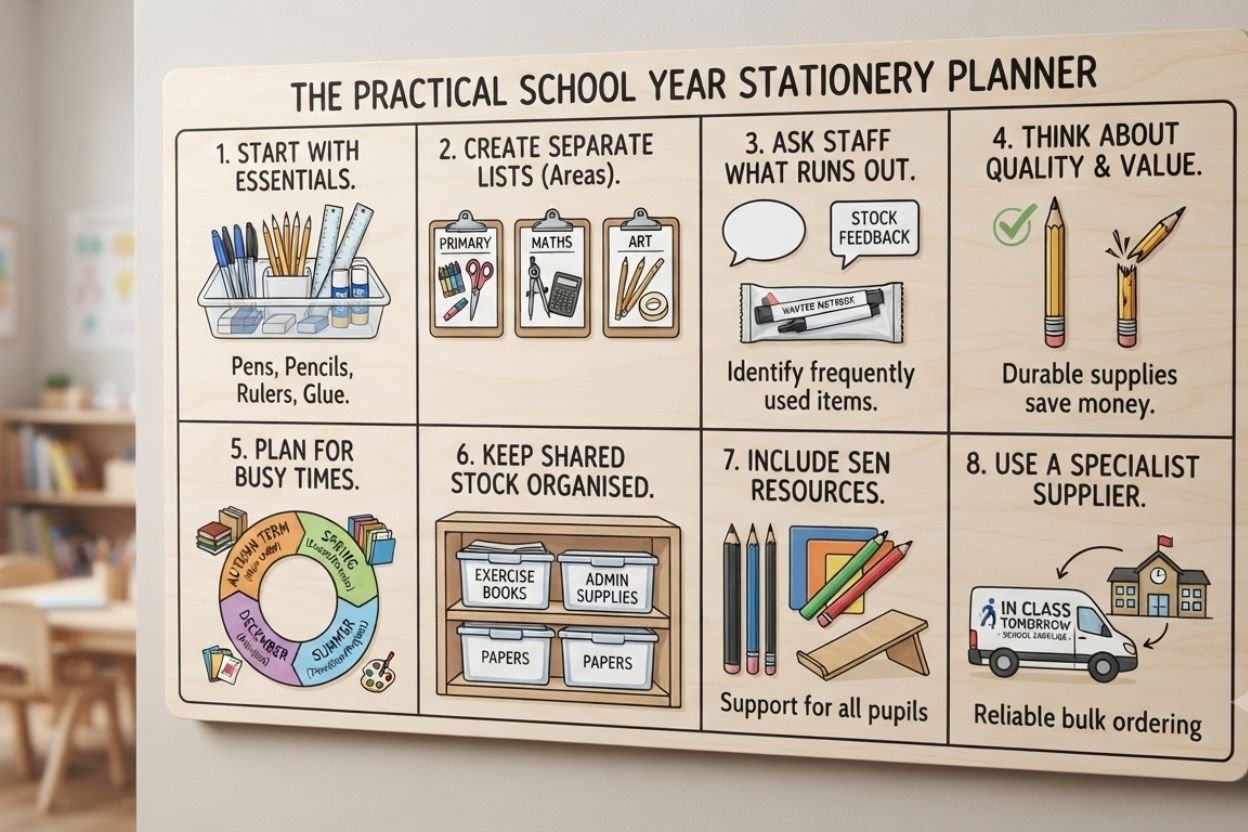
A well-planned stationery list can make the school year much easier. It helps teachers prepare lessons, supports pupils with daily work and reduces last-minute ordering for school offices. Without a clear list, stock can run out at inconvenient times and staff may end up making repeated requests for basic supplies.
School stationery is used in every part of the building. Classrooms, offices, staffrooms, reception areas, SEN spaces and departments all need reliable products. The challenge is making sure the right items are ordered in the right amounts.
For UK schools, a practical stationery list should be based on real classroom use, not guesswork.
Start With the Essentials
The first step is to list the items used every day. This usually includes pens, pencils, rulers, erasers, sharpeners, glue sticks, whiteboard pens, sticky notes, folders, paper clips and exercise books.
Primary schools may also need colouring pencils, crayons, scissors, labels, craft supplies and display materials. Secondary schools may need calculators, protractors, compasses, highlighters, revision cards, document wallets and subject folders.
Schools ordering school stationary through In Class Tomorrow can find a wide range of classroom stationery and admin supplies suited to UK education settings. The range covers everyday writing equipment, filing products, classroom tools and practical supplies for teachers and pupils.
Create Separate Lists for Different Areas
One mistake schools sometimes make is creating one general stationery list for everyone. This can lead to some departments having too much of what they do not need and not enough of what they use regularly.
A better approach is to create separate lists for different areas. A primary classroom list may include pencils, glue sticks, mini-whiteboard pens, crayons and scissors. A maths department list may focus on rulers, compasses, protractors and calculators. An art department may need sketching pencils, erasers, masking tape and display materials.
Office teams will have different needs again, such as envelopes, staplers, filing trays, paper clips and document wallets. Creating separate lists helps each team get what they actually use.
Ask Staff What Runs Out First
Teachers know which items disappear quickly. Pens may run out faster in one year group, while glue sticks may be used heavily in another. Whiteboard pens are often used daily and may need more frequent replacement than expected.
Asking staff for feedback before placing a large order can help improve accuracy. It also helps avoid waste. If certain items are hardly used, the school can reduce the quantity ordered next time.
This feedback can be collected at the end of each term or academic year. A simple shared list or stock request form can make the process easier.
Think About Quality and Value
School supplies need to cope with regular use. The cheapest option may not always be the best choice if it breaks, dries out or runs out quickly.
Pens should write clearly, pencils should sharpen well, glue sticks should be suitable for classroom tasks and folders should be strong enough to hold regular work. Good-quality stationery can help reduce replacement costs and waste.
Value is not only about price. It is also about how well a product performs during daily school use.
Plan for Busy Times of the Year
Stationery demand often changes during the school year. September is a major ordering period, but schools may also need extra supplies before exams, assessments, open evenings, Christmas activities, art projects and transition days.
Revision cards, highlighters and folders may be more popular before exam periods. Glue sticks, coloured pencils and display materials may be used more during project work. Office supplies may increase during reporting periods or admissions tasks.
Planning around these busy times helps schools avoid shortages and keeps staff prepared.
Keep Shared Stock Organised
Many schools use a central stock cupboard or department storage area. This can work well, but only if it is organised properly.
Items should be grouped clearly, with labels for pens, pencils, glue, folders, paper and admin supplies. Staff should know how to request items and who is responsible for reordering.
If stock is not managed, supplies can disappear quickly or be duplicated across departments. A simple record of what comes in and what goes out can help the school control spending.
Include SEN and Intervention Resources
A good stationery list should also consider pupils who need extra support. Some pupils may benefit from pencil grips, thicker pencils, coloured overlays, writing guides, whiteboards or specific exercise books.
Intervention groups may need their own supplies so staff are not borrowing from classroom stock. Having these items ready helps support sessions run properly.
Schools may also need separate resources for nurture groups, EAL support or small-group tuition. Including these areas in the stationery plan helps make the list more complete.
Why Ordering Through a School Supplier Helps
School-focused suppliers understand the types of products classrooms use every day. This can make ordering easier than buying from general office suppliers.
In Class Tomorrow offers stationery alongside exercise books, paper, art resources, cleaning supplies and classroom essentials. This is useful for schools that want to manage several types of order in one place.
Having access to bulk school supplies can also help office teams save time and keep stock consistent across year groups and departments.
A Good List Saves Time
A practical school stationery list helps everyone. Teachers have the tools they need, pupils can get started quickly, office teams can manage budgets better and classrooms stay prepared.
The best lists are reviewed regularly. They reflect what staff use, what pupils need and what the school has planned for the year.
With the right approach, stationery ordering becomes less reactive and more organised. That means fewer shortages, less waste and a smoother school year.
READ MORE: Watch Strap Replacement Advice for a Better Fit and Finish
