

A watch strap replacement can be a simple job, but it is worth doing properly. The wrong strap can make a watch look unbalanced, feel uncomfortable or fit poorly. The right strap can make the same watch feel much better on the wrist.
Many people replace a strap only when the old one breaks, but there are other good reasons to do it. You may want a smarter look for work, a more practical strap for wet weather or a lighter option for casual wear. A strap change can also help if you have stopped wearing a watch because it no longer suits your style.
The main things to consider are size, material, comfort and how carefully the strap is fitted.
Measure the Lug Width First
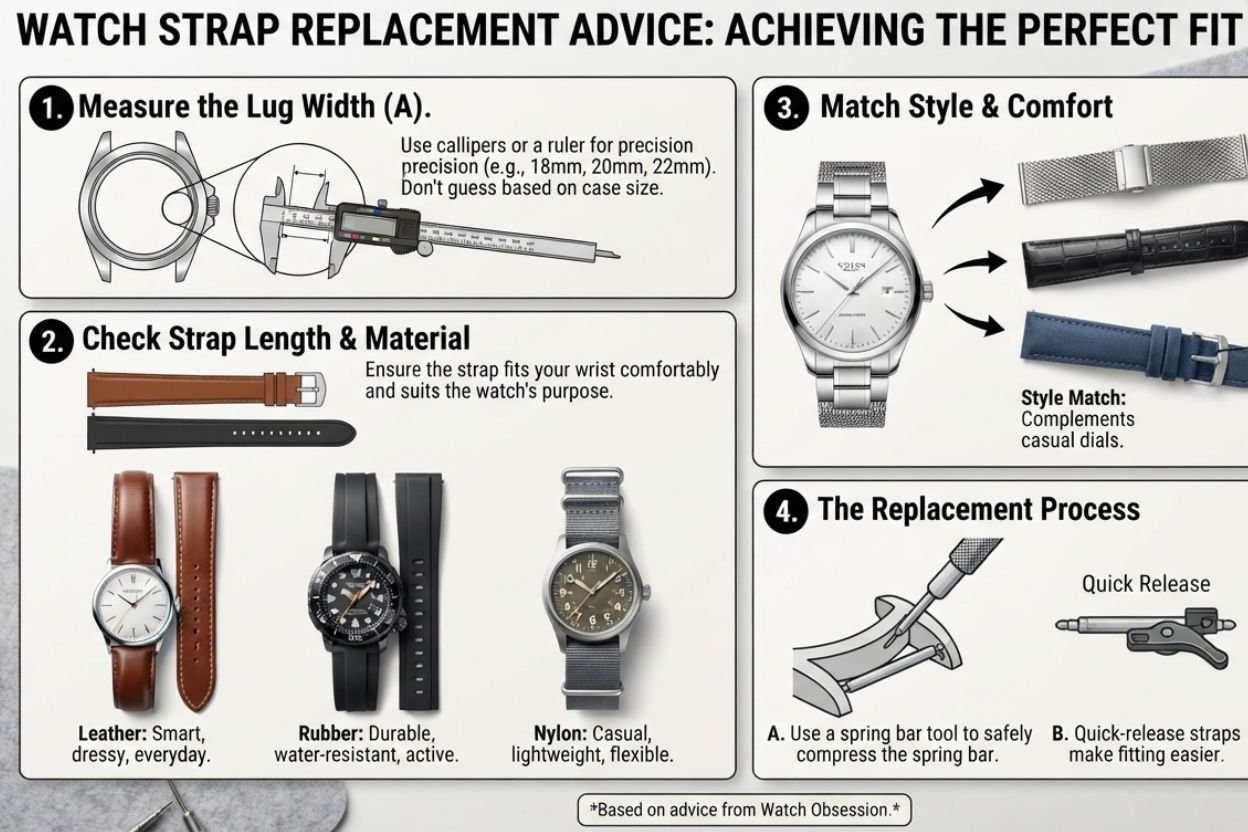
The first step in any watch strap replacement is measuring the lug width. This is the distance between the lugs on the watch case. It tells you what strap width you need.
This measurement is usually given in millimetres. Common sizes include 18mm, 20mm and 22mm, but there are many others. Even a 1mm difference can affect the fit.
Do not guess based on the size of the watch case. A larger case does not always mean a wider strap. The safest option is to measure the gap between the lugs with a ruler or callipers.
If the old strap is still attached, check the underside. Some straps have the size marked there. Still, measuring is best if you are not sure.
Check the Strap Length
Width is not the only measurement that matters. Strap length affects comfort and how the watch sits on the wrist.
If the strap is too long, there may be too much spare material. If it is too short, the watch may feel tight or the buckle may sit in the wrong place. People with smaller or larger wrists should pay close attention to length before ordering.
The watch should sit securely without sliding around too much. It should not pinch or leave deep marks on the skin.
Choose the Right Material
The material should suit how the watch is used. Leather is ideal for smart wear and everyday use. It works well with dress watches, classic watches and many office-friendly styles.
Rubber is a practical choice for sport, wet weather and active use. It is easy to clean and can cope better with moisture than leather.
Nylon is light and casual. It can make a watch feel more relaxed and is useful for weekends or travel.
Metal bracelets can offer a strong and traditional look, especially on sports watches. They may need link adjustment to fit correctly.
There is no single best material. The right choice depends on the watch and your routine.
Match the Strap to the Watch Style
A replacement strap should look like it belongs on the watch. A thin dress watch usually needs a slimmer strap. A large diver or chronograph can handle a thicker strap. A vintage-style watch often suits leather or fabric better than bright rubber.
Case colour and finish also matter. Stainless steel is easy to match. Gold, black and rose gold cases need more care. A mismatched buckle can make the strap look out of place.
Dial colour can help guide strap choice. Black dials work well with black, dark brown or grey. Blue dials pair well with navy, grey and brown. White and silver dials are flexible and can suit many strap colours.
Think About Comfort
A strap that looks good still needs to feel good. Thick leather may take time to soften. Some rubber straps feel more flexible than others. Nylon is usually comfortable quickly, but the weave and thickness can affect how it feels.
The underside of the strap is important because it sits against the skin. A smooth lining can improve comfort for all-day wear.
If you wear your watch every day, comfort should be a priority. A strap that irritates your wrist will quickly become annoying, no matter how good it looks.
Replace the Spring Bars If Needed
Spring bars are the small metal bars that connect the strap to the case. They are easy to overlook, but they are important for keeping the watch secure.
If the spring bars are bent, rusty or loose, replace them when fitting the new strap. Reusing worn spring bars can put the watch at risk.
Some straps include spring bars, but not all. Watch Obsession offers watch straps, tools and accessories, which can help if you are changing straps at home.
Fit the Strap Carefully
Quick release straps are easier to fit because they have a small lever that controls the spring bar. Standard straps usually need a spring bar tool.
If fitting the strap yourself, work slowly and in good light. Place the watch on a soft cloth to reduce the chance of scratches. After fitting, gently pull the strap to check that it is secure.
If the watch is valuable or sentimental, it is worth asking a professional to fit the strap.
Final Thoughts
A watch strap replacement can improve comfort, appearance and security. It is one of the easiest ways to make a watch more wearable.
Measure the lug width, check the length, choose the right material and take care when fitting. With the right strap, a watch that felt tired or uncomfortable can become a regular part of your wardrobe again.
READ MORE: Common Types of Warehouse Racking Damage and How They Can
