

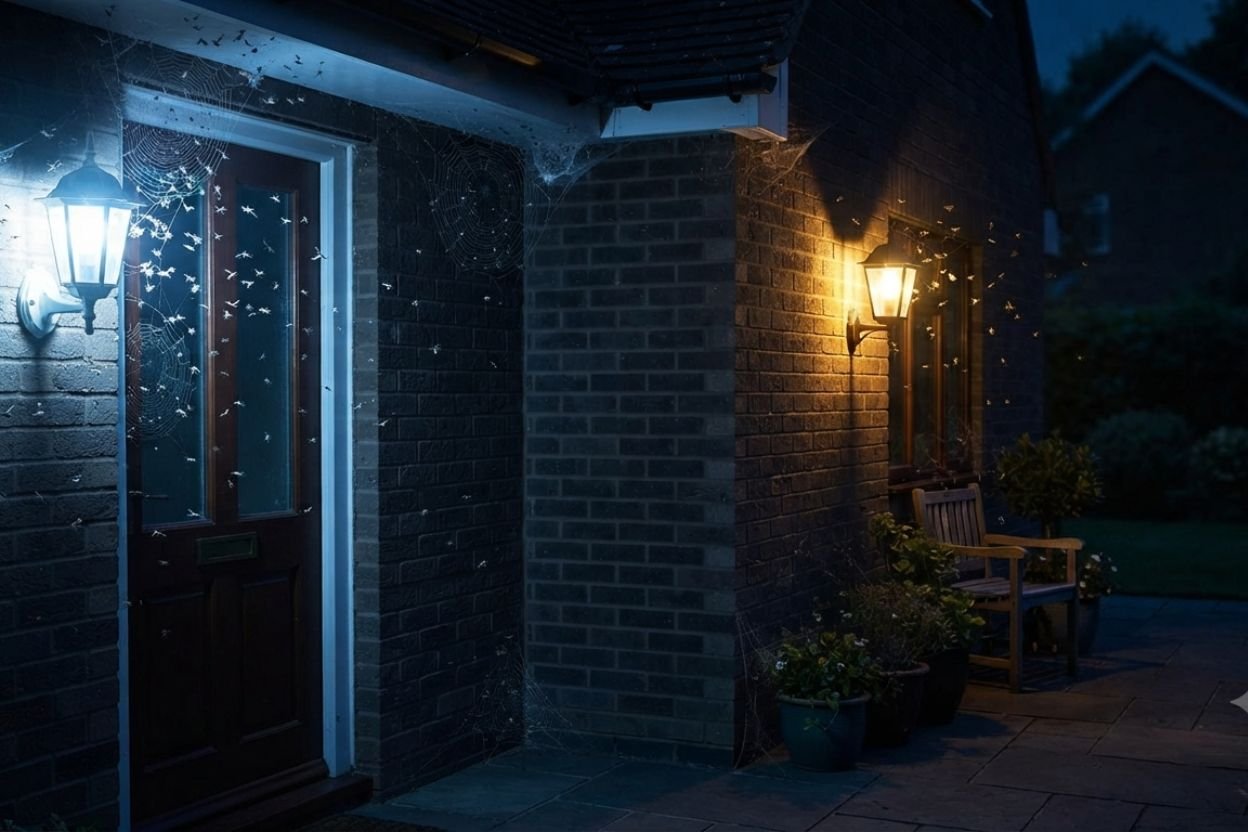
Outdoor Lights Can Invite More Than Just Visibility
Outdoor lighting improves visibility, enhances safety and makes it easier to enjoy patios, gardens and entryways after dark. However, many homeowners are surprised to find that the same lights attracting people to outdoor spaces can also increase spider activity around the property.
If you regularly notice fresh webs around your front door, garage, windows or entertaining area each morning, your lighting setup may be playing a role. While spiders are not usually attracted to light itself, they are drawn to the insects that gather around illuminated areas. As a result, well-lit outdoor spaces can become ideal hunting grounds, encouraging spiders to build webs nearby.
Why Lights Attract Spiders
Artificial lighting attracts a wide variety of flying insects, including moths, flies, beetles and mosquitoes. Many nocturnal insects use natural light sources for navigation, and artificial lights can disrupt this behaviour, causing them to gather around outdoor fixtures.
For spiders, this concentration of insects represents a reliable food source. Rather than actively seeking light, spiders position themselves where prey is easiest to catch. Porch lights, wall-mounted fixtures, garden lighting and illuminated pathways can become suitable locations for web building because insects repeatedly return to these areas throughout the night.
Once spiders discover a dependable food source, they may continue rebuilding webs in the same locations, even after homeowners remove them.
Common Areas of Activity
Certain parts of a property are particularly attractive because they combine lighting with shelter and regular insect activity.
Entryways are among the most common locations for spider webs. Porch lights attract insects, while door frames, eaves and nearby plants provide convenient anchor points for web construction. Spiders may rebuild webs each evening after they have been removed earlier in the day.
Patios and outdoor entertaining areas can experience similar activity. Decorative lighting, string lights and wall-mounted fixtures illuminate these spaces for evening use but may also encourage flying insects to gather. As insect activity increases, spiders may establish webs around outdoor furniture, pergolas, railings and nearby shrubs.
Garages can also provide favourable conditions. Exterior lights combined with sheltered corners, stored items and occasional moisture create suitable environments for spiders to hunt and hide.
Windows are another common hotspot because indoor lighting shining through the glass can attract insects from outside. Spiders may position webs around window frames where insects repeatedly gather.
Balconies, covered verandas and other outdoor entertaining spaces often experience recurring web formation because they combine lighting, structural supports and consistent insect activity in one location.
How to Reduce the Problem
Reducing spider activity often begins with reducing the number of insects attracted to outdoor lighting.
Changing the location of light fixtures may help. Positioning lights slightly further away from doors and windows can reduce insect concentrations immediately beside entry points. Directing lights downwards rather than outwards may also limit unnecessary light spread that attracts flying insects from a greater distance.
Choosing warmer-coloured or yellow-toned LED bulbs instead of cool white lighting may decrease insect attraction. Although no light completely eliminates insects, warmer lighting generally attracts fewer flying species than cooler, blue-rich illumination. Motion-sensor lighting can also reduce constant insect activity by operating only when needed.
Good outdoor maintenance makes a noticeable difference as well. Regularly removing webs may discourage spiders from repeatedly using the same locations. Cleaning outdoor furniture, sweeping patios, trimming vegetation near the home and reducing clutter around storage areas can remove sheltered web-building sites. Keeping outdoor rubbish secure and reducing standing water may also help decrease insect populations that attract spiders.
Professional Solutions
While maintenance and lighting adjustments can reduce activity, they may not fully resolve persistent spider problems. If webs continue appearing despite regular cleaning, hidden harbourage areas or favourable environmental conditions may still be supporting spider populations.
Professional Spider control services focus on identifying why spiders continue returning to a property. Rather than simply removing visible webs, inspections may assess likely harbourage areas, insect activity, structural entry points and outdoor conditions that encourage spiders to remain nearby.
Treatment strategies may include addressing both spiders and the insects that attract them, helping reduce future web formation while targeting areas where spiders commonly shelter during the day. This broader approach aims to manage recurring activity rather than only the visible spiders found around lights and outdoor structures.
Combine Good Lighting Practices With Spider Control
Outdoor lighting remains an important feature for safety and convenience, but understanding its connection with insect activity can help homeowners reduce unwanted spider activity. Small changes to lighting placement, bulb selection and routine outdoor maintenance may significantly reduce the conditions that encourage spiders to settle near the home.
When spider activity continues despite these efforts, combining sensible lighting practices with professional Spider control provides a more comprehensive approach. Addressing food sources, harbourage areas and recurring web locations can help reduce long-term spider activity and support a cleaner, more comfortable outdoor environment.
FAQs
Do outdoor lights attract spiders directly?
No. Spiders are generally attracted to the insects that gather around outdoor lights rather than the light itself.
Why do spider webs keep appearing around my front door?
Front doors often have outdoor lighting that attracts insects at night, providing spiders with a suitable place to build webs and catch prey.
Will changing my outdoor light bulbs reduce spider activity?
Using warmer-coloured or yellow-toned LED bulbs may attract fewer insects, which can indirectly reduce spider activity around illuminated areas.
Which outdoor areas are most likely to attract spiders?
Entryways, patios, garages, windows, balconies and outdoor entertaining spaces with regular lighting commonly experience higher spider activity.
Is removing webs enough to solve the problem?
Regular web removal can help, but spiders may rebuild if insects remain abundant and suitable shelter is still available nearby.
When should I consider professional spider treatment?
If webs repeatedly return despite cleaning and lighting adjustments, or if spider activity increases across several areas of the property, a professional assessment can help identify the underlying causes and recommend suitable treatment.
